
Solar Inverters
Compliance with EN 50549-1 Standard
Powering a Clean Future
Inverters and the Green Transition
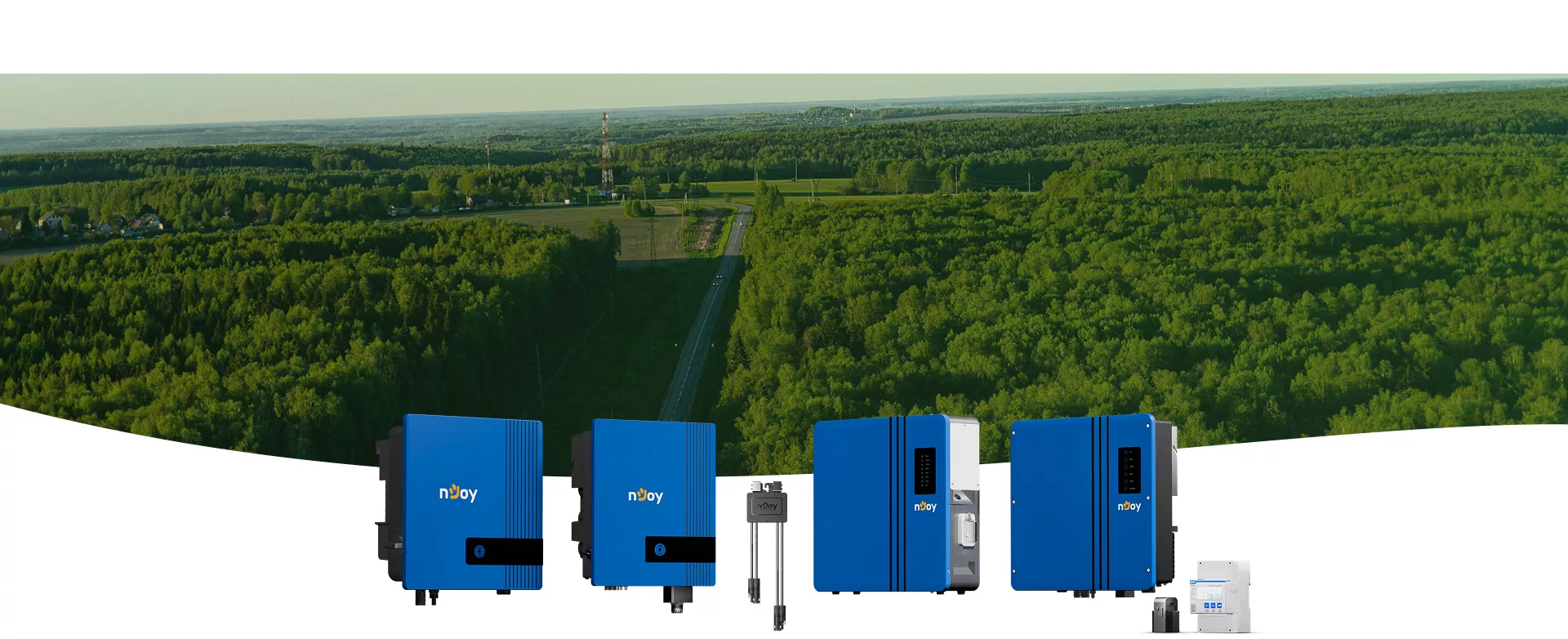
Powering a Clean Future
Inverters and the Green Transition
Solar Inverters
Compliance with EN 50549-1 Standard
Introduction
This article presents the compliance of nJoy Solar Inverters with the EN 50549-1 standard. The inverters have undergone through testing, demonstrating their utilization of advanced power electronics conversion components, such as MOSFET and IGBT. These components enable the conversion of variable DC power, generated from photovoltaic arrays and batteries, into stable utility AC power which can be supplied to the commercial electrical grid.
The inverters are capable of operating in stand-alone mode when the grid voltage is not present. This paper outlines the key features, testing procedures, and regulatory compliance of nJoy solar inverters.
During testing, it was confirmed that all nJoy single-phase and three-phase inverters employ advanced power electronics conversion components, including MOSFET and IGBT. These components play a vital role in converting variable photovoltaic DC power into stable AC power, suitable for feeding into the commercial electrical grid.
Additionally, the inverters feature communication ports such as RS485 and CAN, enabling connectivity to upper computers or networks for remote monitoring via proprietary software. Dedicated earthing terminals are provided for proper grounding, ensuring safe operation.
Introduction
This article presents the compliance of nJoy Solar Inverters with the EN 50549-1 standard. The inverters have undergone through testing, demonstrating their utilization of advanced power electronics conversion components, such as MOSFET and IGBT. These components enable the conversion of variable DC power, generated from photovoltaic arrays and batteries, into stable utility AC power which can be supplied to the commercial electrical grid.
The inverters are capable of operating in stand-alone mode when the grid voltage is not present. This paper outlines the key features, testing procedures, and regulatory compliance of nJoy solar inverters.
During testing, it was confirmed that all nJoy single-phase and three-phase inverters employ advanced power electronics conversion components, including MOSFET and IGBT. These components play a vital role in converting variable photovoltaic DC power into stable AC power, suitable for feeding into the commercial electrical grid.
Additionally, the inverters feature communication ports such as RS485 and CAN, enabling connectivity to upper computers or networks for remote monitoring via proprietary software. Dedicated earthing terminals are provided for proper grounding, ensuring safe operation.

Compliance and Protection for Voltage
and Frequency
nJoy inverters adhere to the voltage and frequency operating ranges specified in the EN 50549-1 standard.
Stringent tests were conducted to verify their compliance, including assessments of protection and fault behaviours, control modes, and active power delivery requirements during over or under voltage and frequency conditions.
The inverters demonstrated their ability to operate within the defined tolerances, ensuring stable performance and protection against power fluctuations.
Compliance and Protection
for Voltage and Frequency
nJoy inverters adhere to the voltage and frequency operating ranges specified in the EN 50549-1 standard.
Stringent tests were conducted to verify their compliance, including assessments of protection and fault behaviours, control modes, and active power delivery requirements during over or under voltage and frequency conditions.
The inverters demonstrated their ability to operate within the defined tolerances, ensuring stable performance and protection against power fluctuations.

The protection system implemented in nJoy inverters evaluates all phases connected to the inverters, as required by the Distribution System Operator.
In the case of three-phase inverters or when the protection system functions as an external system in a three-phase power supply, the evaluation encompasses all phase-to-phase and phase-to-neutral voltages.
Frequency range, voltage range, observation time, and power gradient can be adjusted using the display panel, which is password-protected and accessible to authorized personnel.
The protection system implemented in nJoy inverters evaluates all phases connected to the inverters, as required by the Distribution System Operator.
In the case of three-phase inverters or when the protection system functions as an external system in a three-phase power supply, the evaluation encompasses all phase-to-phase and phase-to-neutral voltages.
Frequency range, voltage range, observation time, and power gradient can be adjusted using the display panel, which is password-protected and accessible to authorized personnel.

Electromagnetic Compatibility and Interface Protection
Similar to other electrical apparatus and fixed installations, nJoy inverters comply with the electromagnetic compatibility requirements outlined in Directive 2014/30/EU or 2014/53/EU, as applicable.
This compliance encompasses various aspects such as harmonic emissions, flicker and voltage fluctuations, DC injection, short and long-duration overvoltage’s, switching frequency emissions and immunity to voltage dips and short interruptions, frequency variations, harmonics and interharmonics, as well as to unbalance.
EMC & Interface Safety

Similar to other electrical apparatus and fixed installations, nJoy inverters comply with the electromagnetic compatibility requirements outlined in Directive 2014/30/EU or 2014/53/EU, as applicable.
This compliance encompasses various aspects such as harmonic emissions, flicker and voltage fluctuations, DC injection, short and long-duration overvoltage’s, switching frequency emissions and immunity to voltage dips and short interruptions, frequency variations, harmonics and interharmonics, as well as to unbalance.
Grid Protection and
Fault Detection

Grid Protection and Fault Detection
To ensure reliable and safe operation, the inverters incorporate a redundant combination of relays for each phase conductor, providing protection against grid faults.
In the event of a fault condition as defined in the EN 50549-1 standard, the relays are designed to automatically disconnect the inverter’s active lines from the grid upon receiving abnormal signals from the relevant protective detection circuit.
This protective mechanism safeguards both the inverter and the grid infrastructure.
To ensure reliable and safe operation, the inverters incorporate a redundant combination of relays for each phase conductor, providing protection against grid faults.
In the event of a fault condition as defined in the EN 50549-1 standard, the relays are designed to automatically disconnect the inverter’s active lines from the grid upon receiving abnormal signals from the relevant protective detection circuit.
This protective mechanism safeguards both the inverter and the grid infrastructure.

Island Detection and
Distribution Network Control
The inverters are equipped with an automatic means of disconnection, following the requirements stated in IEC 62116:2014, to detect island situations. This feature serves multiple objectives, including preventing overvoltage situations in the connected distribution network caused by excessive power production from the inverter, avoiding damages to connected equipment and the network.
(applicable to grid-connected solar
inverters without battery backup)
Islanding and Grid Control
The inverters are equipped with an automatic means of disconnection, following the requirements stated in IEC 62116:2014, to detect island situations.
This feature serves multiple objectives, including preventing overvoltage situations in the connected distribution network caused by excessive power production from the inverter, avoiding damages to connected equipment and the network.
(applicable to grid-connected solar inverters without battery backup)

Even when the grid goes down, the lights stay on...
In backup mode, the hybrid inverter instantly takes over, powering your home with energy from the battery and/or solar panels keeping everything running seamlessly and safely, completely independent from the public grid until power is restored.
Even when the grid goes down, the lights stay on...
In backup mode, the hybrid inverter instantly takes over, powering your home with energy from the battery and/or solar panels keeping everything running seamlessly and safely, completely independent from the public grid until power is restored.
Conclusion
nJoy solar inverters meet the EN 50549-1 standard, ensuring safe, efficient, and reliable solar power conversion. They incorporate advanced power electronics (like MOSFETs and IGBTs), grid and interface protection systems, and support for remote monitoring.
These features enable stable DC-to-AC conversion, compliance with voltage and frequency ranges, and fault tolerance, including automatic disconnection to protect the grid. With thorough testing and regulatory adherence, nJoy inverters offer a high-performance solution for solar energy systems.
Conclusion
nJoy solar inverters meet the EN 50549-1 standard, ensuring safe, efficient, and reliable solar power conversion. They incorporate advanced power electronics (like MOSFETs and IGBTs), grid and interface protection systems, and support for remote monitoring.
These features enable stable DC-to-AC conversion, compliance with voltage and frequency ranges, and fault tolerance, including automatic disconnection to protect the grid. With thorough testing and regulatory adherence, nJoy inverters offer a high-performance solution for solar energy systems.